AI Machine Learning Expert Advisors are advanced trading systems that automate execution on MetaTrader (MT4/MT5) using models trained on historical and real-time market data. Unlike traditional rule-based Expert Advisors that follow fixed “if-then” strategy conditions, an AI based EA trading robot learns from market behavior and adjusts its decisions dynamically. Instead of relying only on predefined indicators, it processes candlestick data, technical indicators, and price patterns to identify evolving market conditions and execute trades based on probability-driven outcomes defined by the trading strategy.
The concept of smarter trade execution focuses on improving speed, accuracy, risk control, and removing emotional uncertainty from trading decisions. At 4xPip, the programmer (developer team) builds AI models that train on structured datasets and continuously refine execution logic across different market scenarios. This includes handling entry, exit, Stop Loss, and Take Profit decisions in a more adaptive way compared to static systems, allowing a trader or EA owner to deploy strategy-based automation that reacts more intelligently to changing market conditions.
AI Machine Learning Expert Advisors in Trading
AI/ML-based Expert Advisors are automated trading systems built for platforms like MetaTrader (MT4/MT5) that execute trades using trained AI models instead of fixed rules. In 4xPip trading robot development, the developer builds an Expert Advisor based on a defined Strategy, where the system learns from market data rather than static conditions in the source code (mq4/mq5 file). These EAs analyze real-time price feeds to execute entries and exits directly on MetaTrader, adjusting decisions based on trained model outputs. This allows the trading system to respond dynamically to market behavior instead of relying on manual rule-based logic.
Machine learning models process large datasets such as OHLCV price action, volatility, and technical indicators (RSI, MACD, ATR, Bollinger Bands, etc.) to detect patterns across multiple market conditions. At 4xPip, the AI system is trained on 10+ years of historical data, including candlestick structures and market volatility behavior, allowing the EA to generate more adaptive trading signals compared to traditional systems.
Key comparison between Traditional EAs and AI-driven EAs:
Traditional EAs:
- Use fixed rule-based logic (predefined “if-then” conditions)
- Do not adapt once deployed unless manually reprogrammed
- Limited to static strategy execution
- Vulnerable to changing market conditions
AI-driven EAs:
- Continuously optimize based on new market data
- Learn from historical and real-time market data
- Improve trade accuracy through pattern recognition and learning
- Adjust dynamically to volatility, trends, and news-driven movements
Core Machine Learning Models Used in EA Strategies
Core ML models used in AI based EA trading systems include regression models, neural networks, and reinforcement learning algorithms. In the 4xPip AI based EA, the developer selects models based on the Strategy defined by the Trader, allowing the expert advisor to analyze market data such as price action, volatility, and technical indicators on MetaTrader (MT4/MT5). Regression models estimate price direction, neural networks detect complex candlestick and indicator patterns, while reinforcement learning focuses on improving decision quality through repeated market interaction.
Supervised learning plays a key role by training on 10+ years of historical market data, where labeled outcomes help the model learn how price moves after specific conditions. This allows the EA to predict future market behavior based on patterns from past trades, improving accuracy in entry and exit decisions. Reinforcement learning further enhances performance by adjusting strategies based on profit and loss outcomes, where successful trades increase reward signals and unsuccessful trades refine or eliminate weak patterns, resulting in continuous strategy optimization over time.
Data Processing and Feature Engineering for Trade Execution
Data processing and feature engineering in AI based EA trading systems focuses on preparing raw market data into a format that the model can effectively learn from. In 4xPip AI robot development, the programmer processes 10+ years of historical market data by cleaning missing values, filtering market noise, and normalizing price data to ensure consistency across all MetaTrader environments. This step is Important because the Bot performance depends heavily on high-quality input data derived from the defined Strategy.
Feature engineering involves transforming raw OHLCV data into meaningful trading inputs such as RSI, MACD, volatility measures, and candlestick-based patterns. At 4xPip, additional structure is built using technical indicators and price action behavior to help the AI based EA trading robot understand market momentum, trend strength, and reversal zones. Feature selection directly impacts model accuracy, as only the most relevant signals are used for training, improving execution speed, reducing false signals, and enhancing overall trade decision quality.
Strategy Development and Optimization in AI EAs
Strategy development in our AI based EA trading bot is built through backtesting and simulation environments using years of historical market data. The programmer tests each Strategy inside MetaTrader to evaluate how the EA performs across different market conditions before live deployment. This process ensures the Strategy reflects real candlestick behavior, indicators, and News Events rather than theoretical rules.
Optimization is done through hyperparameter tuning and genetic algorithms to refine model performance, improve trade accuracy, and reduce drawdown. We systematically adjust AI model parameters to find the best configuration that maximizes profitability while maintaining stability. To avoid overfitting, strategies are validated on unseen market data and multiple timeframes, ensuring the EA performs reliably in live trading conditions instead of only performing well on historical data.
Risk Management and Trade Execution Logic in AI Systems
In the 4xPip AI based EA bot, risk is handled dynamically through automated control of Stop Loss (SL), Take Profit (TP), and position sizing on MetaTrader . The bot adjusts trade volume based on account balance and Strategy rules defined by the trader, ensuring every trade fits controlled risk exposure.
Key execution logic includes:
- Adaptive SL/TP based on market volatility
- Auto position sizing linked to account balance
- Real-time adjustment during high-impact market moves
- Reduced exposure during unstable conditions
Within 4xPip’s system, risk models continuously monitor volatility and drawdown to protect capital in live markets. The AI based EA trading robot reduces lot size or pauses entries when risk thresholds are reached, keeping execution stable across changing conditions.
Real-World Deployment and Integration of AI EAs in Trading Systems
In our 4xPip AI based EA trading robot, deployment is structured through VPS hosting, MetaTrader (MT4/MT5) integration, and API-based systems, allowing the Expert Advisor to run continuously without interruption. The developer ensures effortless connection between Strategy logic and live execution, while the Source code (mq4/mq5 file) is optimized for stable performance across different trading environments.
Key deployment methods include:
- VPS hosting for 24/7 uptime execution
- Native MetaTrader (MT4/MT5) integration
- API-based model communication for AI-driven signals
- Broker connectivity optimization for stable order execution
Execution quality depends heavily on latency, speed, and broker responsiveness, where even milliseconds impact entry accuracy. 4xPip systems are designed to reduce execution delay, ensuring trades are placed exactly when AI signals are generated, avoiding slippage and missed opportunities.
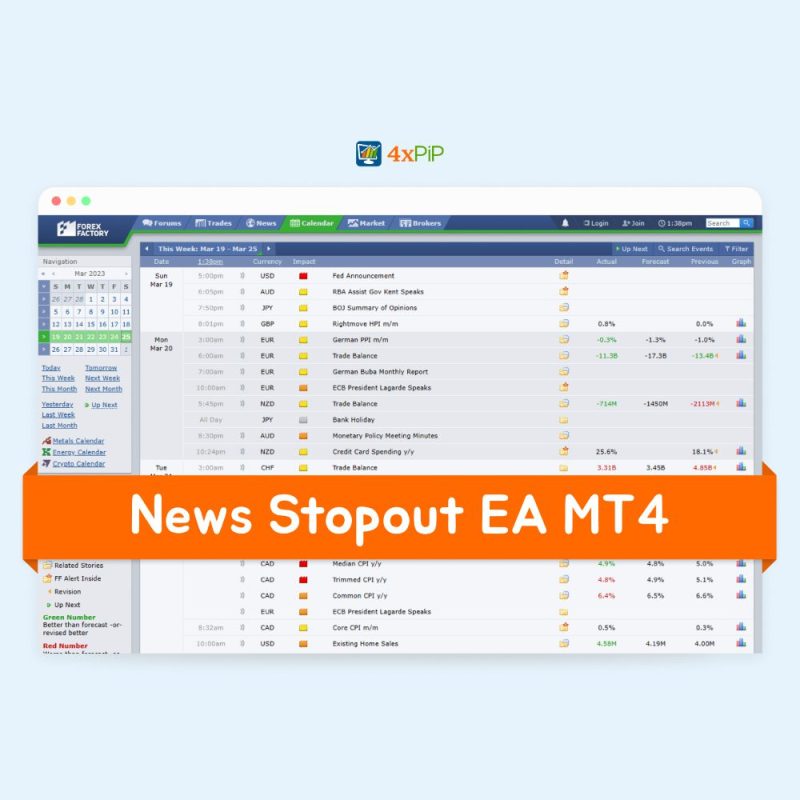
For enhanced decision-making, the AI based EA trading robot integrates external data sources such as news feeds, sentiment analysis, and economic calendars in real time. This allows the system to react instantly to market-moving events, combining live data with historical intelligence for more accurate Buy/Sell execution across changing market conditions.
Summary
AI Machine Learning Expert Advisors are advanced forex trading systems that automate trade execution on MetaTrader using models trained on historical and real-time market data. Unlike traditional rule-based EAs, they adapt dynamically to changing market conditions by analyzing price action, indicators, and volatility patterns. These systems improve trade accuracy, execution speed, and risk management through continuous learning and optimization. Machine learning models such as neural networks and reinforcement learning help refine decision-making over time. With proper deployment and data integration, AI EAs can respond more intelligently to market movements and execute trades with higher precision.
4xPip Email Address: [email protected]
4xPip Telegram: https://t.me/pip_4x
4xPip Whatsapp: https://api.whatsapp.com/send/?phone=18382131588
FAQs
- What is an AI Machine Learning Expert Advisor in forex trading?
An AI Machine Learning Expert Advisor is an automated trading system that operates on MetaTrader platforms using trained machine learning models. It analyzes historical and real-time market data to execute trades based on adaptive, probability-driven decisions rather than fixed rule sets. - How is an AI-based EA different from a traditional trading robot?
Traditional EAs follow static “if-then” rules and do not adapt unless manually modified. In contrast, AI-based EAs continuously learn from new market data and adjust their strategies dynamically based on changing market conditions. - What kind of data do AI trading systems analyze?
These systems analyze OHLCV data, candlestick patterns, technical indicators like RSI, MACD, ATR, and Bollinger Bands, along with volatility and price movement behavior to generate trading signals. - Why is machine learning important in EA trading strategies?
Machine learning enables trading systems to recognize patterns, adapt to market changes, and improve decision-making over time. This helps increase accuracy in entries and exits while reducing reliance on manual strategy adjustments. - Which machine learning models are commonly used in AI EAs?
Common models include regression models for trend prediction, neural networks for pattern recognition, and reinforcement learning algorithms that improve performance based on profit and loss feedback. - What is the role of feature engineering in AI trading systems?
Feature engineering transforms raw market data into meaningful inputs such as indicators and price patterns. This improves model accuracy, reduces noise, and helps the EA make better trading decisions. - How is strategy development done in AI-based Expert Advisors?
Strategies are developed through backtesting and simulation using historical market data. The EA is tested across multiple conditions to ensure reliability before being deployed in live trading environments. - How do AI EAs manage trading risk?
AI EAs manage risk through dynamic stop loss and take profit levels, automated position sizing, and volatility-based adjustments. They can also reduce exposure or pause trading during unstable market conditions. - What is required to deploy an AI Expert Advisor in live trading?
Deployment typically involves VPS hosting for 24/7 uptime, MetaTrader integration (MT4/MT5), broker connectivity setup, and sometimes API connections for real-time AI signal processing. - Can AI EAs react to news and market events?
Yes, advanced AI trading systems can integrate external data such as news feeds, economic calendars, and sentiment analysis tools. This allows them to respond quickly to high-impact events and adjust trading decisions in real time.