In the fast-moving world of forex trading, traders are constantly searching for strategies that can improve consistency and recover losses efficiently. One such approach that often enters the conversation is the Martingale strategy. While it may appear structured and logical on the surface, its practical implications in trading environments raise important concerns.
This article takes a deep look at how the Martingale approach functions in forex markets, its theoretical foundation, and the risks traders must understand before applying it. Along the way, we also highlight how platforms like 4xPip provide tools and insights to help traders navigate complex strategies more responsibly.
What is the Martingale Strategy in Forex?
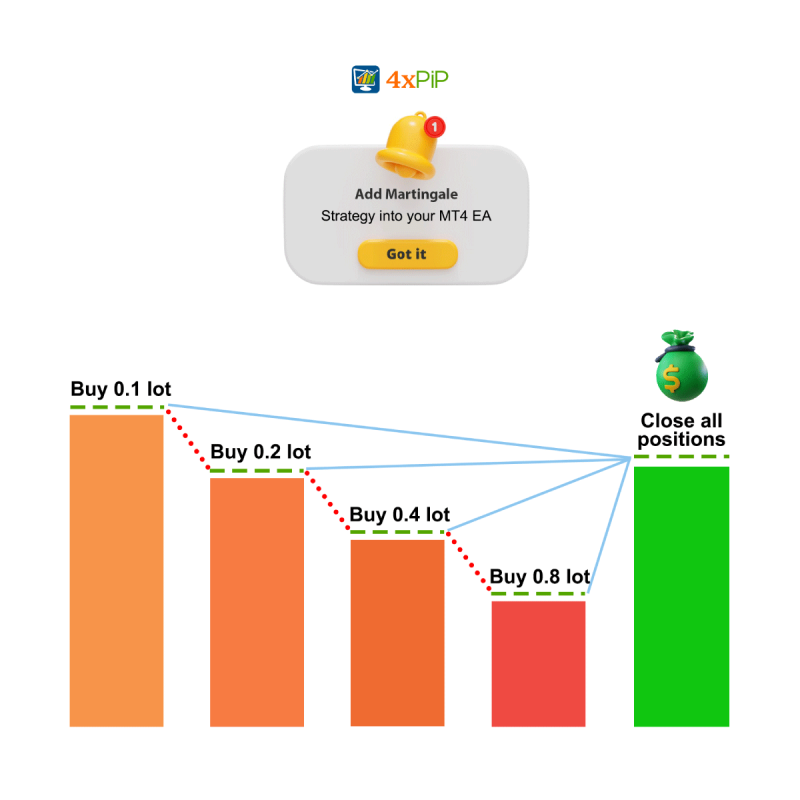
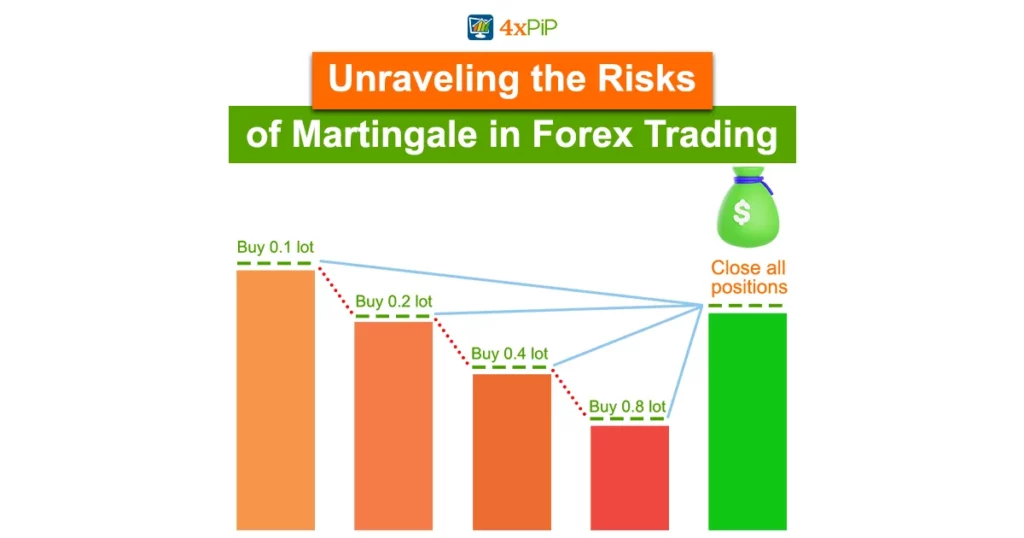
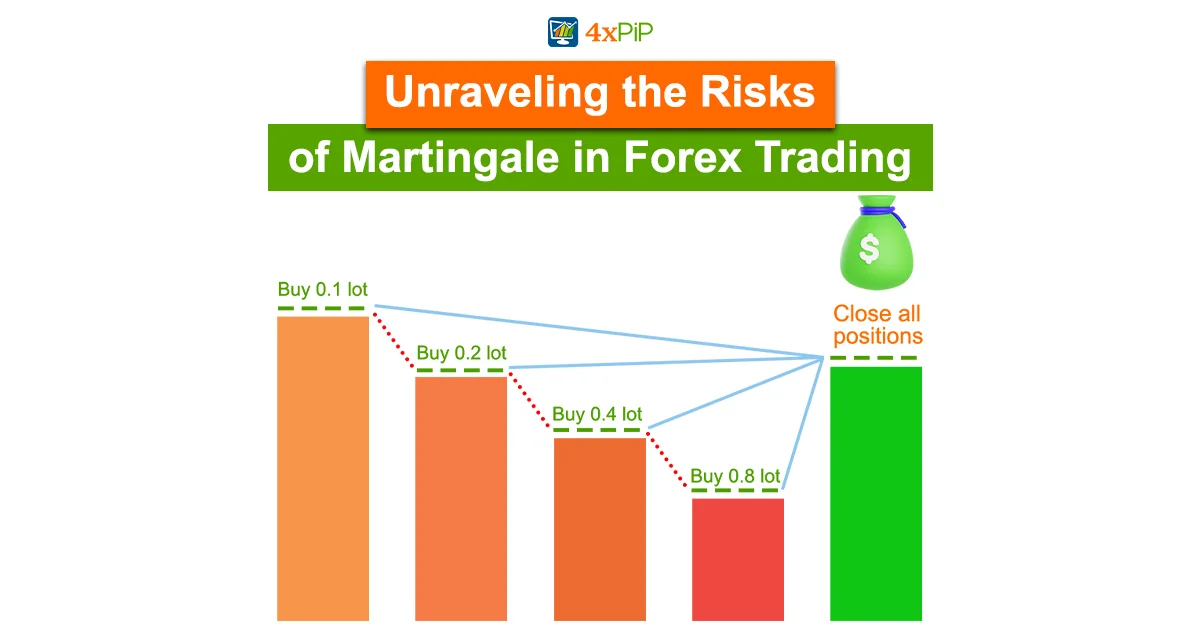
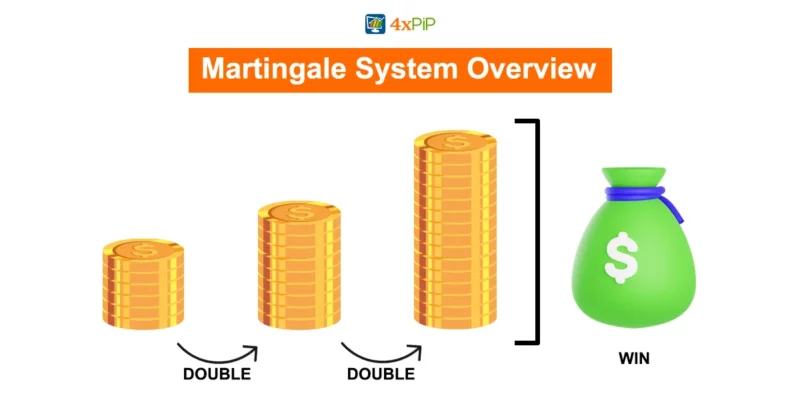
The Martingale strategy is a position-sizing method where a trader increases the size of a trade after a loss, with the goal of recovering previous losses when a profitable trade eventually occurs. The idea is simple: each new position is larger than the previous one, so a successful outcome can offset earlier losses and still generate a net gain.
In forex trading, this translates into increasing lot sizes after consecutive losing trades. The expectation is that price movements will eventually reverse, allowing the trader to exit with an overall profit across the sequence.
While this concept may seem mathematically sound in theory, it relies heavily on assumptions about market behavior that do not always hold true in real trading conditions.
Martingale System Overview
The Martingale approach is often integrated into automated trading systems, where position sizes are adjusted dynamically based on previous outcomes. On a performance chart, such systems may show long periods of steady growth, which can give the impression of stability.
However, this apparent consistency can be misleading. The strategy inherently involves increasing exposure over time, which means that risk accumulates silently. A prolonged unfavorable trend can quickly escalate position sizes to levels that strain account limits.
Because of this, the Martingale system is often associated with high drawdown potential, even if it appears stable during shorter periods.
Perils of Martingale Illustrated
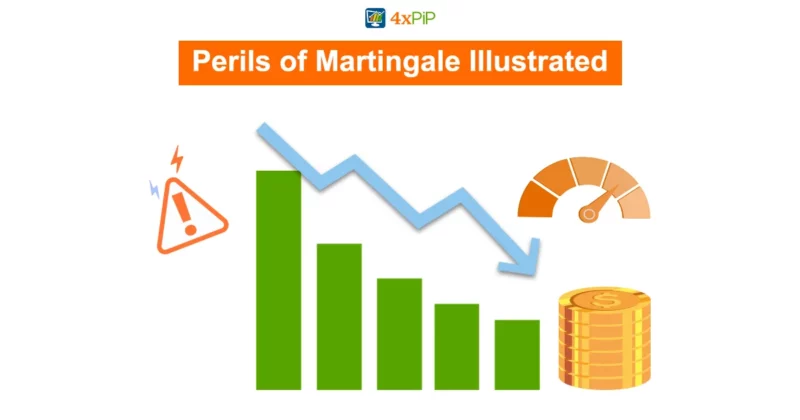
A key weakness of the Martingale strategy lies in its sensitivity to consecutive losses. Even with a relatively large trading account, a sequence of losing trades can rapidly increase position sizes beyond sustainable levels.
For example, starting with a modest position size may seem safe, but each additional increase multiplies exposure. After several losses in a row, the required capital to continue the sequence grows significantly. At that point, traders may face margin limitations or forced liquidation.
This is not just a theoretical concern. Forex markets can trend strongly for extended periods, and relying on a reversal at the “right time” is not guaranteed. When the market continues moving in one direction, the strategy’s risk becomes very real.
Applying Martingale in Forex Markets
In practice, traders use the Martingale method by opening positions in a chosen direction and increasing trade size if the market moves against them. The goal is to capture a retracement or reversal that allows all open positions to close in profit.
While this approach can work in ranging markets, it becomes much more dangerous during strong trends. Forex markets are influenced by macroeconomic events, interest rate decisions, and geopolitical developments, all of which can drive sustained price movements.
Without strict risk controls, the strategy can lead to significant losses during these conditions. This is why many experienced traders approach Martingale with caution or avoid it entirely.
Automated Trading System Experiment
To better understand the behavior of the Martingale strategy, automated systems are often used for testing. These systems simulate trading scenarios by placing positions under predefined conditions and adjusting sizes after losses.
In many cases, such experiments show periods of consistent returns, especially when markets are relatively stable. However, the results also reveal a critical flaw: a single extended losing sequence can erase previous gains entirely.
Additionally, systems that operate without protective measures—such as stop-loss levels or exposure limits—tend to amplify this risk. The absence of risk boundaries allows position sizes to grow unchecked, increasing the likelihood of large drawdowns.
These findings highlight an important reality: while Martingale can produce short-term consistency, its long-term sustainability is questionable without strict controls.
The Illusion of Stability
One of the most appealing aspects of the Martingale strategy is the smooth equity curve it often produces in the early stages. This can create the impression of a reliable system, especially when backtested over limited data.
However, this stability is often an illusion. The strategy does not eliminate risk, it just delays it. When losses eventually occur in sequence, the impact can be severe and sudden.
This is why traders must look beyond surface-level performance and evaluate how a strategy behaves under extreme conditions. Understanding worst-case scenarios is essential before committing capital.
Conclusion
The Martingale strategy remains one of the most debated approaches in forex trading. While its logic is straightforward and its short-term results can appear attractive, the underlying risks are significant.
Traders considering this method should approach it with caution, implement strict risk management rules, and avoid relying solely on the expectation of market reversals.
For those looking to explore advanced trading strategies more safely, platforms like 4xPip offer tools, automation solutions, and expert insights designed to support better decision-making in complex market environments.
To learn more, visit 4xPip or contact their team at [email protected] for personalized guidance.
FAQ’s
What is the martingale system?
The martingale system doubles trades after losses, commonly used in financial trading.
How does the martingale apply to trading?
Traders adopt martingale by doubling positions after losses, a strategy fraught with escalating risks.
Why is martingale considered risky in trading?
Martingale’s exponential trade increase can deplete capital swiftly during consecutive losses, posing substantial risks.
What distinguishes a martingale trading system?
Recognizable by extraordinary balance curves, martingale systems often lack risk mitigation mechanisms.
Is martingale used in automated trading systems?
Yes, martingale principles are integrated into automated trading, amplifying both potential profits and risks.
What’s the theoretical foundation of martingale?
Martingale theory involves doubling trades after losses, assuming unlimited capital for endless risk-free profits.
Can martingale be profitable in the long term?
While martingale can yield short-term profits, its inherent risks make long-term profitability questionable.
What are the dangers of martingale in trading?
Martingale’s hidden dangers include rapid capital depletion during extended losing streaks, posing significant risks.
Why should traders exercise caution with martingale?
Traders must tread carefully with martingale due to its potential for quick capital erosion and substantial risks.